
 Mykhailo Samus
Ukraine has done something the United States and most NATO militaries still have not fully internalized: it has built a doctrine for defeating mass drone attacks at sustainable cost. What emerged under the pressure of nightly Shahed strikes is what Ukrainian practitioners increasingly call a form of “small air defense” – a dedicated, layered architecture for countering one-way attack drones and other low-cost aerial threats. In January 2026, President Volodymyr Zelenskyy publicly announced a new approach inside the Air Force focused specifically on mobile fire groups, interceptor drones, and other short-range means, and appointed Deputy Air Force Commander Pavlo Yelizarov to help organize this sector. Soon after, Ukrainian military reporting described the creation of a new air-defense unmanned systems command and the operational integration of hundreds of crews into multiple interception echelons.
This matters because Ukraine is no longer treating Shaheds as an air-defense anomaly. It is treating them as a separate battlespace. The Ukrainian answer is not a single weapons system but a regional defense ecosystem: mobile fire groups, light aviation, radars, electronic warfare, acoustic and visual detection, and now specialized interceptor drones designed to preserve scarce surface-to-air missiles for higher-end threats. That is the essence of the doctrine: defeat cheap mass attack with scalable, layered, and affordable tools rather than exhausting strategic interceptors on tactical nuisances. This logic reflects the cost-exchange realities highlighted by CSIS, which noted that using high-end Western missiles against Shahed-type drones is economically unfavorable, especially when Patriot-class interceptors cost millions while Shaheds may cost only tens of thousands of dollars.
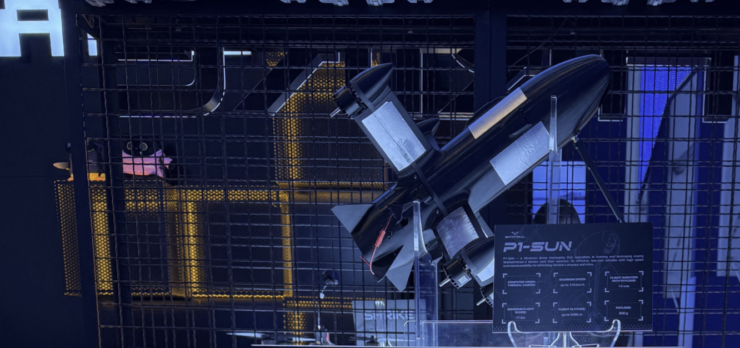
A key part of this Ukrainian innovation is the rapid development of anti-Shahed interceptor drones. The main types now discussed publicly include the Sting, a high-speed interceptor developed by Wild Hornets; the P1-SUN, fielded by SkyFall; and the Bullet, another Ukrainian high-speed interceptor design. Public reporting describes these systems as relatively low-cost, mass-producible, and optimized specifically for chasing and destroying Shahed-type loitering munitions. Reuters and AP report that Ukrainian firms are now producing such systems at scale, with some manufacturers claiming monthly output in the tens of thousands and combat success measured in the thousands of kills.
The strategic implication is obvious. The United States is not fully prepared for this kind of war. In the current conflict with Iran, reporting indicates that the U.S. and its partners have been forced to expend very costly air-defense munitions, including Patriot, THAAD, and Aegis interceptors, against Iranian missile and drone attacks. Reuters, the Wall Street Journal, and other outlets have reported multibillion-dollar expenditure rates in just the opening days of the campaign, while other reporting highlights the structural imbalance of firing million-dollar interceptors against far cheaper one-way attack systems. Even where interceptions succeed tactically, the exchange ratio remains punishing.
That is precisely why Ukraine now has a unique opportunity. Kyiv is not merely a recipient of air defense assistance. It is becoming a provider of the next generation of air defense for the United States and its allies. Ukrainian industry and Ukrainian combat formations have accumulated something no Western defense contractor can replicate in a lab: live, iterative, combat-tested experience against sustained Shahed warfare. Reuters and AP both report growing U.S. and Gulf interest in Ukrainian interceptor drones because they offer a far cheaper and more scalable response to the same Iranian-origin threat family now stressing American and partner defenses in the Middle East.
But this creates a second strategic issue: technology sovereignty. If the United States wants access to Ukrainian anti-Shahed capability, it should not seek to strip Ukraine of its intellectual advantage through uncontrolled technology transfer. The right model is different: protect Ukrainian design sovereignty, keep core technologies in Ukrainian hands, and finance large-scale production in Ukraine with guaranteed procurement of finished systems. In other words, invest in Ukrainian manufacturing capacity, not in the dilution of Ukrainian know-how. That would strengthen Ukraine’s defense, expand allied production, and preserve the innovation base that created these capabilities under wartime pressure.
The Trump administration has already lost valuable time by failing to take Ukraine’s air-defense lessons seriously enough. Reuters reported in March 2025 that Trump froze U.S. military aid to Ukraine, and later reporting showed continued strain around air-defense supply and missile availability. Now, as the Iran war exposes the cost of relying on exquisite interceptors against mass drone warfare, Washington is being forced to rediscover under fire what Ukraine learned through survival: the future air-defense fight is layered, decentralized, drone-enabled, and brutally cost-sensitive.
If the United States does not move immediately toward a constructive industrial and operational partnership with Ukraine, the consequences may be severe. A prolonged war with Iran would not just consume missile stocks and budgets. It could expose a deeper problem: the U.S. military remains optimized for a different era of air warfare than the one now unfolding. Ukraine has already adapted to the drone-centric battlefield. America still has time to learn from that experience – but not much.