
 NGRN
NGRNHi-Tech Triad vs. Nuclear Deterrence
Author: Valerii Borovyk, Chairman of the Board of the New Energy of Ukraine Alliance, founder of the defense products manufacturer FIRST CONTACT, combat veteran
The article was originally published at Dzerkalo Tyzhnia
A paradigm is a multifaceted concept which, depending on context, may denote a particular style, tradition, concept, overarching idea or law that, shaped by time and circumstances, remains stable for a certain period. A shift in such stability constitutes a paradigm change.
Ukraine is being drawn into the implementation of a “Budapest Memorandum 2.0” scenario. Our leaders—though apparently not all of them—are still resisting it with all their might, trying to avoid the wrath of the “strange” president of what remains the world’s most powerful country. Yet with each passing day, it becomes increasingly difficult to preserve decision-making agency, barely staying afloat between those who cynically want to sell you out and those who simply want to devour you. This is still possible with the support of European partners, who are demonstrating a level of determination unseen since World War II, but they too face problems of legal unanimity—problems they themselves created when founding the European Community.
On the battlefield, we are fighting for our very existence as a nation. On the political front, the state is fighting for its territory and for strong security guarantees that it would like to enshrine in a separate, serious document.
But can such a document truly protect us in the future? Will assistance really arrive immediately, even if it clearly specifies timelines for troop deployments, retaliatory strikes, weapons transfers and so forth?
Does anyone genuinely believe that words on paper bearing the signature of “the best president of the greatest country” will automatically result in concrete military action? Wake up: either you have not read the new US National Security Strategy or you are completely detached from the realities of the new world order. It states plainly: “The days when the United States supported the entire world order like Atlas are over.”
The document explicitly prioritizes national interests and signals a reduction of America’s role as a “global regulator.” This is not an emotional political message; rather, it is a profound structural transformation of the international system. Under such conditions, no document can guarantee support or an automatic military response. Guarantees without immediate enforcement mechanisms are not elements of security; they are merely tools of temporary diplomatic appeasement. We have been through this before. It has already been sold to us. And we bought it—only to receive a war from the very party that signed a binding document. Apologies to my American friends and partners, but Bismarck’s famous words about 19th-century agreements with Russia—that they were not worth the paper they were written on—can now be applied to 21st-century America as well. The Vietnamese, the Kurds, the Syrians and the Afghans can attest to this. And soon, perhaps, Ukrainians and Europeans as a whole will too. We must recognize the obvious: the world has changed. Documents and solemn signatures are now worth almost nothing. Only real power and the principles of leaders matter. Unfortunately, this is the reality of our time. Such an era brings such challenges—and we must live through them in order to one day return to trust in words, promises and guarantees.
In this environment, Ukraine faces a fundamental question: what should a country that is neither the largest nor the most powerful in the world do? How can it survive and preserve its agency? The solution is neither simple nor quick. But we must find and implement it ourselves, without illusions and without relying on paper guarantees.
The full-scale war in Ukraine has demonstrated that a state lacking numerical or nuclear superiority can effectively deter and inflict significant losses on a far stronger aggressor if it possesses an advanced technological ecosystem and political will. No document protects better than one’s own technologies and capabilities.
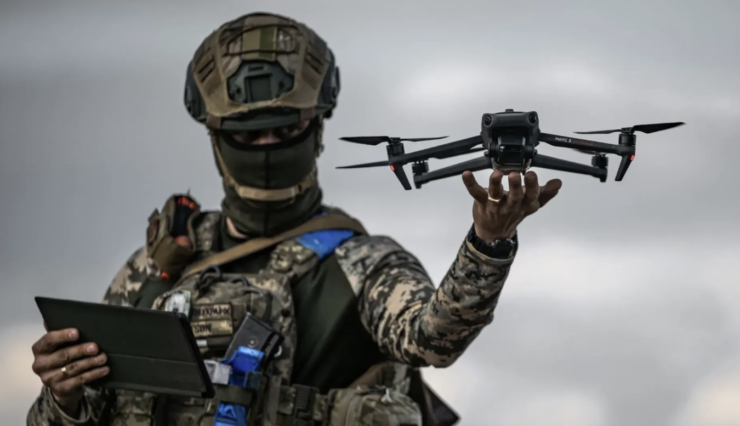
From the perspective of someone deeply involved in drone production and defense technology development, I can say the following: while the world searches for the right wording and models of guarantees, those of us at the front see real facts every day. High-precision munitions, electronic warfare systems, drones of various classes, autonomous systems and long-range platforms using artificial intelligence are no longer auxiliary elements of warfare—they have become its new foundation.
It is precisely this combination of technologies that enables strikes against Russia’s strategic and logistical targets. In effect, Ukraine is demonstrating the possibility of asymmetric influence on targets that until recently were considered unattainable for states without strategic weapons.
A unique operation by Ukrainian special services against long-range bombers at their airfields and naval strike assets forming part of Russia’s “nuclear triad” opened a new type of warfare: the use of large numbers of low-yield strike elements against vastly superior high-power components. This became possible due to the long and painstaking work of engineers, manufacturers, instructors, pilots and special service operatives who planned and executed the most complex elements of the operation at its final stage, both inside Ukraine and beyond its borders. This experience marked the beginning of a new strategy of warfare against a significantly superior enemy, implemented not only at sea but also on land. A similar operation was later carried out by Israel’s Mossad, which attacked Iran’s air defense systems, clearing the way for the near-unhindered operation of IDF aviation and missile forces.
Together with the equally unique operations of Ukrainian naval drones and what I believe will be the explosive development of ground-based robotic systems, this forms a new technological “hi-tech triad” as a counterweight to nuclear weapons.
In the new reality of confrontation with stronger aggressors that possess more powerful weapons, including the most lethal ones, it is becoming possible for smaller countries to defend themselves. The rapid development of advanced technologies and their application in defense is now vital for survival. This does not always require nuclear weapons. What is required instead is the ability to neutralize delivery systems, leaving them at their bases on enemy territory.
Various elements of a future “technological triad”—air-based, land-based and sea-based (surface or underwater), as well as underground platforms (however strange or unrealistic this may sound today)—can be used to accomplish this task. This can be achieved either by using a single element of the triad, as has been done in earlier operations, or through an integrated approach involving all elements, with close coordination across each component.
Of course, historical operations such as Spiderweb are difficult to scale—and that is precisely what makes them unique. However, the technological solutions involved (the production of specialized drones, their adaptation to specific operational needs, training in complex modes of application, the manufacture of “fly boxes,” containers, launch elements, warheads, etc.) can be standardized for use in other missions against the enemy. Tactical elements of operational planning can likewise be applied to subsequent strikes against the enemy’s most vulnerable points. The country must take the next historic step: to create a powerful “hi-tech triad,” or “high-technology triad,” that will consolidate and further develop all of Ukraine’s breakthrough achievements in UAVs, naval drones, and ground-based robotic systems. Underwater drones will soon become part of this triad. In the near future, space-based combat and reconnaissance unmanned systems will also be added. Active work in this direction is already underway.
Subsequent decisions aimed at miniaturization, the active use of swarm technologies and the application of artificial intelligence for planning and decision-making will make it possible to carry out surprise attacks against the enemy at virtually any point within its own lair. This will create the conditions for “a thousand wasp stings”—strikes that can not only destroy enemy defense systems and inflict losses but also become one of the key elements of its eventual collapse.
In this context, it is worth examining what is currently happening on the front lines with regard to the provision of reconnaissance, countermeasure and strike capabilities to combat units. In addition, continuing the discussion on the need to improve certain provisions of the adopted mobilization law, a number of observations and proposals are in order for discussion and possible further implementation by the state leadership and the command of the Armed Forces of Ukraine.
Let us begin with what, by now, everyone likely understands: not only the war of the future, but the war of today is primarily a war of drones, missiles and “smart” artillery—systems that are themselves guided and corrected by drones. This is what state leaders, military commanders, officers, soldiers, analysts and Western partners admit, in addition to virtually everyone who comments on the war. Yet these words and convictions have yet to translate into concrete action. No matter how much the Ministry of Digital Transformation (which carried out genuinely groundbreaking work in the UAV sector at the beginning of the war), the State Service for Special Communications (which, to the surprise of many, was designated by the state as the de facto operator for UAV procurement), the Ministry of Defense, the Cabinet of Ministers, the Office of the President and the President himself report on the large-scale supply of drones, electronic warfare systems and air-defense assets to the front, there remains a catastrophic shortage—especially of high-quality systems. In some cases, they are simply absent altogether.
Why is this the case? It is a logical question, widely asked, and many answers are offered—mostly practical, financial or technical. Often, however, the answers are also emotional and harsh, sometimes rightly pointing to corruption and bias in the selection of suppliers who are unable to fulfill orders or who deliver substandard products.
Yet the core answer lies elsewhere. Despite daily discussions and public statements, none of the key decision-makers in the state or the military are mentally prepared for a war of machines. And this lack of readiness directly affects their decisions. The discussion and subsequent adoption of the mobilization law is a clear illustration of this. Everyone—including the initiators of the law, the President, the Cabinet of Ministers, members of parliament and society at large—focused primarily on the rules of mobilization and the number of people to be mobilized, that is, potential living soldiers. But if we are speaking about today’s drone-centric warfare, the primary focus must be on increasing the number of drones at the front—and, in the future, on fully replacing humans with drones, however far-fetched that may sound.
The future begins now. Therefore, the principle of promoting and concentrating all those involved in replacing human soldiers with mechanical ones must be a cross-cutting theme running through the mobilization law, subordinate regulations, military orders and directives. What does this mean in practical terms? It means that through these laws and documents, we must first and foremost identify and engage engineers, designers, project managers, IT specialists, assemblers and other production personnel. This is where mobilization should begin—along with agreements (yes, agreements) with these specialists. They should not be forced to hide while defending their country, flee abroad or fear walking into a café. They must not be harassed, hunted down in their homes or public places, but respected—given the opportunity to realize their potential and, through their work, save the lives of hundreds and thousands of our heroes on the front lines. Handing them assault rifles does not bring us closer to our strategic objective. Our goal is not to defeat the enemy by the number of fallen soldiers—a race we cannot win for purely mathematical reasons—but by technology, strategy, skill and motivation, while preserving the lives of the nation’s elite for postwar recovery and development. These specialists must be given pencils and soldering irons, computers and equipment, clear direction for their work and institutional support for the implementation of their projects. The military and those already mobilized will understand this, as they witness daily the enemy’s advantage in drone warfare. Without exaggeration, nearly every soldier has experienced the impact of enemy drones and the shortage of our own. Without a radical shift in this direction, the tide of this war cannot be turned, nor can the enemy be driven from our land.
To achieve this, the paradigm guiding amendments to the mobilization law, related decisions and concrete actions must first and foremost shift from the principle of “How many soldiers do we need—100,000, 200,000, 500,000?” to the principle of “How many specialists do we need to produce one, two, or five million drones, air-defense systems, electronic warfare systems and the like—systems that will save 100,000, 200,000 or 500,000 lives?”
This applies to everyone: the Commander-in-Chief of the Armed Forces, branch commanders, and unit, battalion and company commanders. Those who fail to understand this, who do not implement it and who do not contribute to it must step aside and be replaced. Otherwise, the technological advantage of the enemy—which is already rapidly adapting and evolving—will simply sweep them away. Unfortunately, this could happen to us and to our country.
I will cite several examples of problems with reserving specialists from my own experience. One of our companies manufactures kamikaze strike drones. The previous state contract had already been fulfilled and expired, while the next one was still in the process of being signed. It was impossible to reserve all specialists before the new contract was finalized. The “Diia City” regime allows reserving only 50 percent of personnel. One of the engineers working on a long-range kamikaze drone with a range of 800 kilometers was walking along a street in Kyiv when representatives of the Territorial Recruitment Center (TRC) approached him. Within 24 hours, the engineer was already at a training facility, holding an assault rifle and wearing body armor, undergoing preparation for deployment to the front. No evidence that the individual was engaged in activities of strategic importance to our victory was accepted. “The law is the law,” the TRC representatives said.
Here is another example: work began on the design and delivery of ground-based mining drones to the front lines. Finalizing a contract with the state will take several more months at best. Yet the products are already being sent to the front. The people working on this project are forced to sneak along fences early in the morning and late at night just to reach the production site without being seen by TRC personnel.
Do tell me: does anyone truly believe this is strategically sound or promising? The problem here is not the TRC representatives, who are simply doing their job. The problem lies in the legislation that regulates their activities.
In light of this, concrete changes must be made to the legislation to encourage all specialists who can contribute to the production of drones and other military equipment to join private and state-owned companies, with immediate reservation status and appropriate financial incentives. Clear criteria for measurable results must be established, and specialists engaged in promising weapons systems, potentially breakthrough technologies, as well as fundamental research in the defense sector, must be reserved. Equally important is to seek assistance from our compatriots who left the country earlier or very recently, as well as from the Ukrainian diaspora. This is particularly relevant for those studying at technical universities, working in IT companies or high-tech industries or professionally engaged in chemistry, physics, mathematics, robotics, aircraft engineering, space technologies and related fields. We must find ways to interest and involve them. These incentives need not be purely financial; they may also include emotional motivations linked to the tangible contribution of their work abroad to Ukraine’s victory and to the future prosperity of their homeland—a homeland that may already feel distant to them.
Let me repeat it: we must negotiate with such people, not intimidate them with forced return and war. The results of their decisions may materialize only months or even years later. But we must accept that these individuals need to work in laboratories and at computers—in Ukraine or abroad—to create our technological edge over an adversary that is, unfortunately, still stronger and more numerous.
The strategic goal of all these complex measures should be clear: we must focus on inventing a fundamentally different type of weapon—one that surpasses nuclear weapons technologically-wise, despite the fact that Russia continues to boast of nuclear arms and threaten their use. The emotional factor—the threat to the physical survival of our nation—must motivate us to create an entirely new category of weaponry, the mere existence of which will give us an advantage over other countries in this world, and above all over our enemies, both today and in the future. The intellectual potential of Ukrainians, together with their historical experience of breakthrough inventions that have shaped and continue to shape global technological development, provides not just hope but confidence in achieving this ambitious goal.
To this, we must add the need to change the paradigm through which we understand the paths to survival in this war. Only a technological breakthrough in the military sphere—ensured by the stimulation and empowerment of outstanding specialists and scientists—can provide effective protection for our state, regardless of the level of political agreements, electoral cycles in partner countries or the rise to power of different types of leaders in aggressor states.
Stop being afraid of nuclear weapons. Tomorrow they will be a relic of the past, more of a burden to those who possess them than an advantage. This world is changing. And we are changing it.