
 Mykhailo Samus
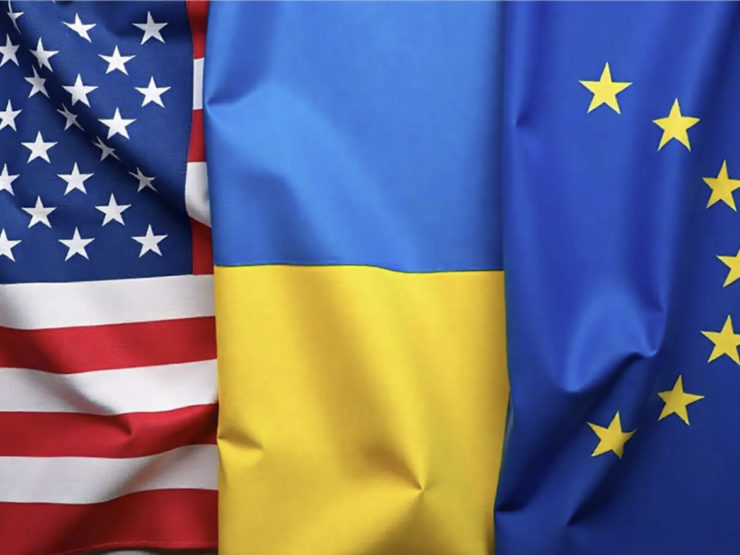
The gradual erosion of confidence in the United States as the unquestioned guarantor of European security is no longer a theoretical discussion. The political trajectory of Washington is pushing Europe toward a historic conclusion: the continent urgently requires its own integrated security and defence system capable of deterring and, if necessary, defeating Russian aggression without relying entirely on the United States.
At present, Europe remains structurally dependent on NATO’s American backbone: strategic airlift, ISR capabilities, missile defence, logistics, nuclear deterrence, and operational command structures. While discussions about “European strategic autonomy” have existed for years, the Russian war against Ukraine and growing uncertainty surrounding US commitments have transformed the issue from a political slogan into a strategic necessity.
The problem is timing.
A gradual reduction of the American role would already create enormous challenges for Europe. However, a sudden political decision by Washington to sharply downgrade or effectively leave NATO would create an immediate security vacuum across the continent. European states would discover that many of their defence structures remain underprepared for high-intensity conventional war against aggressive Russia.
Under such circumstances, only a limited group of countries could rapidly form a credible military response force capable of deterring or confronting Russian aggression. At the centre of such a coalition would inevitably stand Ukraine, together with the Nordic and Baltic states.
Ukraine possesses what most European armies currently lack: large-scale modern combat experience against the Russian military, adaptive operational culture, drone-centric warfare capabilities, electronic warfare integration, resilient command structures under constant pressure, and an ecosystem of rapid battlefield innovation. Ukraine is no longer simply defending Europe – it is actively shaping the future model of European warfare.
The Nordic and Baltic countries, meanwhile, have demonstrated a far clearer understanding of the Russian threat than many larger Western European states. Their military planning, societal resilience, reserve systems, and strategic culture are already oriented toward long-term confrontation with Moscow.
In this context, the Joint Expeditionary Force (JEF) may become highly relevant. The JEF – a UK-led multinational security framework bringing together Northern European states – was originally designed as a rapidly deployable, flexible coalition capable of responding to crises below the threshold of full NATO mobilisation. Although not conceived as an alternative to NATO, the JEF format offers an important prototype for future European defence cooperation: agile, regionally focused, politically flexible, and operationally integrated.
A future European defence architecture may therefore emerge not through Brussels bureaucracy alone, but through coalitions of states already psychologically and militarily prepared for confrontation with Russia.
At the same time, Europe should understand a fundamental reality: Russia is already engaged in long-term military adaptation. The Kremlin is rebuilding its armed forces, scaling wartime industrial production, restructuring operational doctrines, and preparing for prolonged confrontation with the West. Delaying decisive European military transformation only increases future risks.
This is why supporting Ukraine remains Europe’s most effective strategic investment. Every destroyed Russian brigade, aircraft, logistics hub, or command structure weakens Moscow’s ability to threaten the rest of Europe in the future.
Equally important, European militaries must systematically study the Ukrainian experience of the new Revolution in Military Affairs (RMA). Ukraine has become the world’s primary laboratory of modern warfare: drone saturation, distributed reconnaissance-strike networks, electronic warfare ecosystems, AI-assisted targeting, maritime drones, and compressed sensor-to-shooter kill chains are redefining military power in real time.
The future European defence system cannot be built around Cold War assumptions alone. It must integrate the lessons of the Ukrainian battlefield.
Europe is approaching a strategic turning point. The old transatlantic security model may no longer be guaranteed indefinitely. The states that understand this reality first – and act accordingly – will shape the next security architecture of the continent.
Ukraine must not remain outside that architecture. It should become one of its central pillars.