
 NGRN
NGRNHow Command Creates the Conditions for an Offensive
Lessons from the 3rd Army Corps’ operations along the Borova–Lyman axis
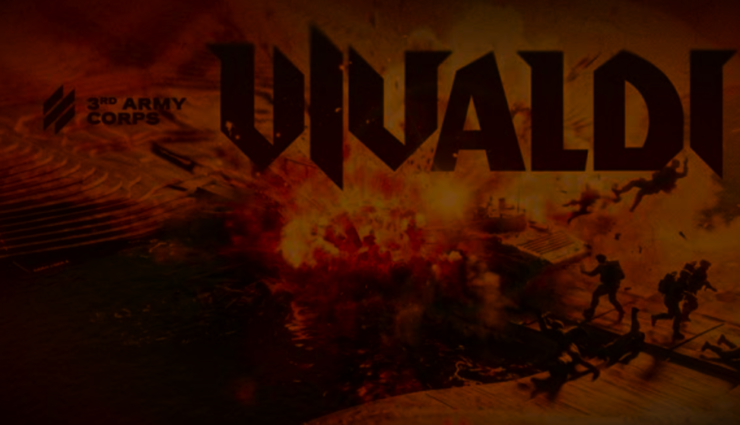
Operation Vivaldi can readily be described in terms of changes to the front line. According to a statement by the 3rd Army Corps command on 20 September 2026, over two phases the Corps and attached forces restored Ukrainian control over 125 square kilometres, including 50 square kilometres liberated from Russian occupation. The statement reported the liberation of Shandryholove and Derylove and the establishment of full control over Drobysheve. These figures reflect the results claimed by the Ukrainian side; they do not explain how the conditions for the advance were created.
An account published on 23 September by Colonel Rodion Kudriashov, the Corps’ deputy commander, provides part of the answer. It describes a sequence that began more than six months before the offensive action: stabilising an unsettled defensive line, eliminating Russian infiltration, rebuilding brigades, restructuring command, integrating intelligence and fires, and disrupting the enemy’s supply system. In this account, Vivaldi illustrates how a modern offensive operation takes shape well before assault groups move forward. What follows is an analysis based on the participants’ public accounts; those accounts do not make it possible to determine the precise contribution of each factor to the final result.
First, a Stable Front and a Secure Rear Area
When the Corps assumed responsibility for its sector, its immediate task was to halt the deterioration of the situation. Russian units operated in small groups, infiltrating between positions, building up behind the forward line and threatening supply routes. Under this form of pressure, the front does not necessarily collapse at one conspicuous point. Instead, uncertainty gradually grows over who controls the gaps between strongpoints, the roads and the approaches to them.
The operational consequences are direct. A headquarters cannot reliably set the start line for its own operation, form a reserve or build up resources if forces have to be diverted continually to deal with threats in the rear. Russian infiltration therefore constrained the Corps’ freedom of action even where it did not result in the formal seizure of ground.
According to Kudriashov, by June the Corps had stabilised the sector from Borova to Lyman and eliminated areas of enemy infiltration. In its account of Vivaldi’s first phase, the Corps also reported clearing Novoselivka, Oleksandrivka, Yarova and the outskirts of Korovii Yar of infiltrators, as well as liberating Serednie. The public account does not provide a complete picture of the fighting in each locality. The sequence of action is nevertheless significant: restore the coherence of the defence and secure the logistics network before forming a strike grouping. In a war where the forward line is permeable, control of the ground between positions and in their rear becomes a precondition for an offensive.
Restructuring Command as Part of Operational Preparation
The second stage concerned the combat effectiveness of the subordinate brigades. Some had joined the Corps after heavy fighting, having suffered losses, faced manning problems and, crucially, lost confidence in their commanders. The task was therefore not simply to place new headquarters over existing units. Their ability to plan, receive replacements, maintain links between echelons and carry out decisions had to be restored.
Kudriashov describes the measures taken as including the replacement of some commanders, the reorganisation of headquarters and the strengthening of the NCO chain of command. The principle he attributes to Corps Commander Andrii Biletskyi is that a commander must be accountable for the entire cycle, from the training of a soldier to the unit’s performance in combat. This goes beyond checking that an order has been carried out. If training, equipment, intelligence, sustainment and subsequent action are disconnected, responsibility for the outcome becomes dispersed across the chain of command.
At Corps level, the challenge is more demanding than it is for an individual brigade: formations with different levels of attrition, experience and technical capability must be brought into alignment without turning the headquarters into a bottleneck for every tactical decision. Effective command in this context means a clear concept of operations, an allocation of resources and authority, and the ability of subordinate commanders to act quickly within those bounds. In these circumstances, personnel decisions, NCO training and the restoration of headquarters procedures all become part of preparing for the operation.
An Offensive as the Integration of Intelligence, Isolation and Ground Action
In Kudriashov’s account, an offensive is defined by the work that precedes the infantry’s advance. The enemy must be found and its pattern of activity understood; its ability to observe friendly action must be constrained; its supply system disrupted; the effectiveness of its uncrewed systems reduced; and the movement of its reserves restricted. Only then can assault units operate in conditions more favourable to achieving and holding their objectives.
This represents a shift in emphasis. The close fight for a position remains essential, but its success increasingly depends on the prior contest for information, routes and the enemy’s decision time. It is particularly important that individual strikes support a specific operational purpose rather than remain isolated tallies of targets hit.
One example cited is the use of the Corps’ uncrewed systems against Russian logistics. According to Kudriashov, after strikes on a pipeline and depots, the enemy was forced to change its routes for delivering fuel and lubricants. In its account of the first phase, the Corps specified its own assessment: the pipeline had been put out of service, the depots relocated, and fuel supplies shifted to Russia’s Voronezh Oblast. The sources used here do not independently confirm the scale or duration of this relocation. The mechanism is nonetheless instructive: a strike can matter not only because stocks are destroyed, but because the enemy is forced to alter its sustainment arrangements, costing time and complicating support to its forward forces.
Corps brigades operated alongside intelligence and uncrewed systems units, as well as attached elements from Ukraine’s Special Operations Forces, Defence Intelligence of Ukraine and State Border Guard Service. The 15 September statement named the 60th Separate Mechanised Brigade and the 125th Separate Heavy Mechanised Brigade, a battalion tactical group from the 3rd Separate Assault Brigade, the Corps’ 3rd Separate Reconnaissance Battalion and 25th Separate Anti-Tank Battalion. Attached forces included the 66th Mechanised Brigade, the 85th Tactical Group of the 8th Special Operations Regiment, Defence Intelligence of Ukraine’s Artan special unit and the 10th Mobile Border Detachment Dozor. To counter infiltration, Kudriashov said, an integrated headquarters was established to coordinate special operations and intelligence units at the tactical level within a single concept of operations. This is an important organisational point: in combat, cooperation does not follow simply from the presence of different forces. It depends on a shared understanding of the task, the exchange of information and agreed decision-making arrangements.
The available sources do not disclose all the methods used by these units. They do, however, support an analytical judgement: a decisive factor was the ability to bring different means of surveillance, fires, special operations and ground manoeuvre into a single sequence, tied to the Corps’ concept of operations.
Technology Creates an Advantage Only as Part of a Working System
Russia’s advantage in manpower and material resources compels Ukrainian forces to seek greater effect from every unit and system. In Kudriashov’s account, Biletskyi set the task of using technology to offset some of this disparity. Uncrewed aircraft already account for a substantial share of strikes against the enemy, while the Corps sees uncrewed ground systems as the next area for development, with some functions at the forward edge gradually transferred to robotic platforms.
The number of drones alone, however, does not show whether a force has an advantage. What matters is the link between detecting a target, passing the data, selecting a means of engagement, authorising its use and assessing the result. If intelligence identifies a target but the information arrives late, the strike asset is not in the right place, or the headquarters fails to connect the engagement to the next phase of the operation, the mere presence of the technology changes little.
Ground robotics have a dual significance in this context. They can take on selected tasks in dangerous areas and reduce the need for people to remain continuously close to the forward line. At the same time, this is a development priority, not a cause of Vivaldi’s success established by the available public evidence. The operation demonstrates the integration of uncrewed systems with command arrangements already in use; the broader transfer of functions to ground robots remains a task for the next stage.
Two Decision Cycles: From Target to Strike, and from Problem to Action
Military discussions often focus on shortening the time between detecting a target and striking it — the kill chain. Kudriashov draws attention to another, no less important cycle: from the emergence of a problem, through a decision, to action. This matters particularly where the situation changes faster than a headquarters hierarchy can clear every move.
Examples might include the appearance of a new infiltration group, a change in the enemy’s route or the loss of surveillance over a sector. If a local commander has to pass the problem through several levels without authority to act within defined limits, timely detection will not produce a timely response. The tempo of an operation is therefore shaped by two processes: how quickly a unit engages an identified target, and how quickly the system adapts to a changed situation.
This points to the role of NCOs, trained officers, headquarters procedures, a shared operational picture and the exchange of experience between brigades. Reducing delay means defining authorities before combat, preparing personnel to make decisions within the commander’s intent, and removing unnecessary gaps in the flow of information. This is an analytical conclusion drawn from Kudriashov’s account, not a claim about the Corps’ specific internal regulations.
Preparation as a Multi-Month Operation in Its Own Right
The sequence of Vivaldi shows why the date on which offensive action begins says little about when the operation actually started. According to the Corps’ deputy commander, preparation took more than six months. During that period, the defence had to be stabilised; infiltration pockets eliminated; control of units restored; their combat effectiveness rebuilt; surveillance and engagement arrangements established; the forward line sustained; ammunition, drones and other resources accumulated; the enemy studied; and subsequent decisions prepared.
One important feature was planning the next move before the previous one had been completed. This allows the results of one action to be exploited before the enemy can reorganise its defence, while a change in the situation can be met with prepared options. It is here that the initiative can be seized: Russian command is made to spend time reacting, while the Ukrainian command is already preparing the next phase.
The operation’s public results should be read with the different categories of ground in mind. Reports on the first phase referred to 75 square kilometres cleared of infiltrators and a further 10 square kilometres liberated from Russian occupation. The 125 square kilometres reported as restored to Ukrainian control over the two phases included 50 square kilometres liberated from Russian occupation. “Restored to control”, “cleared” and “liberated from occupation” describe different conditions on the ground. Conflating these figures would give a misleading impression both of the scale of the initial infiltration and of the nature of the result achieved.
What Can Be Scaled
Vivaldi does not provide a ready-made template for another sector. The terrain, density of Russian forces, condition of Ukrainian brigades, logistics and availability of reserves will differ. Nor do the command’s accounts suggest that this model of command can be introduced by order alone: it requires competent commanders, a strong NCO cadre, capable headquarters, surveillance assets, sustainment and time to rebuild units.
The principles that can be scaled are organisational: assess a unit’s combat effectiveness before assigning it an offensive task; give headquarters a common concept of operations for different forces; plan logistics as part of the fight; link each intelligence and engagement asset to a commander’s decision; train subordinate echelons to act without unwarranted delay; and transfer effective practices beyond a single brigade after the operation.
The principal lesson of Vivaldi is the connection between command and battlefield results. According to the Corps’ own public statements, it moved from countering infiltration and stabilising the front to making local advances. This is a significant example, but not proof that the result can automatically be repeated under different conditions. Russian forces also adapt. Assessing the durability of this approach will require observation of subsequent operations and the cost they impose on Ukrainian forces.
For now, Vivaldi supports a measured conclusion: under conditions of resource constraint, offensive potential emerges when a corps can rebuild its own units, deny the enemy freedom of action, integrate intelligence and fires, and make decisions faster than the tactical situation changes. Territorial gains are the visible outcome of that work. Its most important part took place earlier — in command, preparation and sustainment.
Analysis based on sources
- Rodion Kudriashov, “When Command Becomes a Weapon: Lessons from Operation Vivaldi”, Ukrainska Pravda, 23 September 2026. Participant’s account and principal source on preparation and methods.
- Report on the first phase of the operation, Ukrainska Pravda, 15 September 2026.
- Report on the second phase and claimed overall results, Ukrainska Pravda, 20 September 2026. Figures are attributed to statements by the 3rd Army Corps command.