
 Mykhailo Samus
What the war is likely to look like by the end of 2026
Mykhailo Samus, Director, New Geopolitics Research Network
The most likely outcome by December 2026 is neither a Russian breakthrough nor a Ukrainian strategic victory, but a harsher contest of adaptation in which technology, manpower and air defence determine who enters 2027 with the initiative.
Russia is unlikely to convert its superiority in mass into a decisive operational result before year-end. Ukraine can deny that result only if it turns its current lead in remote strike and autonomous systems into a sustained campaign while preserving its experienced combat core.
A war of unequal strengths
The war has entered a phase in which both sides possess enough force to prevent defeat, but neither has yet assembled the combination of manpower, firepower and operational surprise required for a decisive victory. Russia still enjoys the larger resource base. It can absorb losses, produce ballistic missiles and glide bombs at scale, and sustain pressure across several axes. Its method remains brutally consistent: grind forward where local conditions allow, strike Ukrainian cities and infrastructure, and wait for political or social exhaustion to do what the battlefield has not.
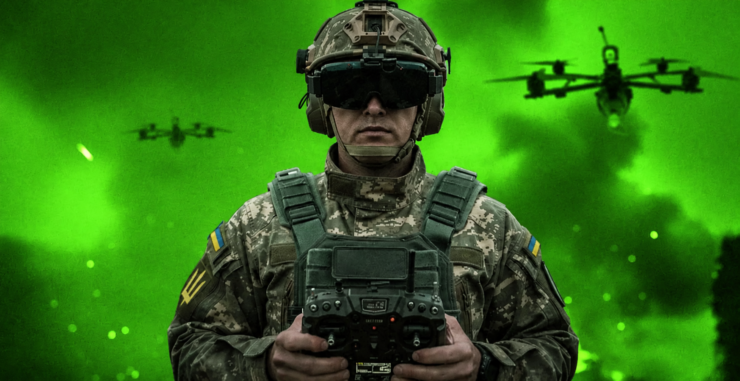
Ukraine’s comparative advantage is different. It lies in the speed with which the defence ecosystem connects soldiers, engineers, private firms and state procurement. Ukrainian forces have expanded middle- and deep-strike capacity, built dense drone kill zones and moved more rapidly towards autonomous terminal guidance, interceptor drones and unmanned ground systems. The Ministry of Defence reports that Ukrainian systems can now reach targets up to 1,750 kilometres away. This is not simply a matter of range. It gives Kyiv the possibility of attacking the operational machinery behind the Russian front rather than contesting Russian mass symmetrically.
The central forecast: violent stalemate, not stability
Between now and December, Russia is likely to keep its main effort in Donbas. The operational purpose will be to place the Sloviansk-Kramatorsk area under growing pressure while forcing Ukraine to spend scarce reserves on several secondary sectors. Russia may narrow its offensive effort to those axes where logistics and depth still permit concentration. Elsewhere, it will increasingly rely on positional defence, drones and strikes against Ukrainian supply routes.
The front may therefore look relatively static on a map while becoming more violent in depth. Russia will intensify attempts to isolate the theatre by attacking railways, bridges, energy assets and urban infrastructure. The winter campaign will matter as much as any local advance. Ballistic missiles remain the most difficult threat: Ukrainian official reporting for June put interception of ballistic missiles at roughly 40 per cent, far below the rate against drones and cruise missiles. Patriot-class interceptors, dispersal and hardening will remain strategic constraints, not merely air-defence issues.
Ukraine’s answer is likely to be a more systematic campaign against Russian logistics, air defence, command nodes and the military-economic base. The crucial shift is from successful individual strikes to effects-based operations: repeated attacks designed to keep key systems degraded faster than Russia can repair, reroute or replace them. The aim is not a spectacular collapse of Russian logistics. It is to slow the offensive, raise the cost of every Russian kilometre and force Moscow to choose what it can afford to protect.
Three variables will decide the balance
First is the adaptation cycle. Ukraine currently appears faster at integrating autonomous and remotely operated systems, but this is a lead in tempo rather than an unbridgeable technological gap. Russia is copying fibre-optic control, mesh networks, robotic logistics and terminal guidance, and it can scale mature designs quickly. Ukraine’s window may narrow before the end of the year if procurement, software integration or battlefield feedback slows.
Second is manpower quality. Ukraine’s critical vulnerability is not total mobilisation on paper but the preservation of experienced infantry, junior leaders, drone crews and technical specialists. Better recruitment, defined service terms, credible rotation and rehabilitation are operational necessities. Technology can reduce exposure and substitute for some forms of mass; it cannot repair a hollowed-out combat core. Russia faces its own recruitment problem as casualties rise, but it retains more coercive and financial instruments with which to fill units.
Third is external endurance. European support is becoming more industrial and predictable. The EU’s 2026 support package earmarks an indicative EUR60 billion for Ukraine’s defence capacity and procurement, strengthening Kyiv’s ability to finance domestic and European production. Yet Europe cannot quickly replace every American capability. Ballistic-missile defence, selected munitions and intelligence support will remain areas where decisions by Washington can materially alter risk.
Crimea as a strategic dilemma
Occupied Crimea remains Russia’s most politically sensitive military hub and Ukraine’s most promising source of asymmetric leverage. A campaign that persistently degrades the peninsula’s air defence, naval infrastructure and supply routes could compel Moscow to divert resources from Donbas. The realistic objective for 2026 is not an immediate liberation campaign. It is partial operational isolation: making the southern grouping harder to sustain and turning Crimea from a Russian power-projection platform into a resource sink.
Russia will adapt through dispersal, smaller convoys, alternative routes, protected storage and limited maritime supply. For this reason, one-off strikes will not suffice. The value of pressure on Crimea lies in its cumulative effect and in the dilemma it creates for the Kremlin: continue the Donbas offensive while accepting rising risk in Crimea, or dilute the main effort to protect the peninsula.
Scenarios to December
The baseline scenario, with an indicative probability of about 55 per cent, is continued attrition with limited local movement. Russia fails to reach a decisive objective, Ukraine prevents a major rupture, and both sides expand long-range and autonomous warfare. A Ukrainian operational advantage, perhaps 25 per cent, would follow from a sustained logistics-interdiction campaign, improved force preservation and growing pressure on Crimea. A Russian operational advantage, perhaps 20 per cent, would become more likely if Ukraine’s manpower position deteriorates, ballistic-missile defence is depleted, or Moscow closes the technological gap faster than expected. These figures are judgements, not forecasts with statistical precision.
The strategic test
By the end of 2026, success for Ukraine should not be measured only in liberated territory. A credible strategic result would be to deny Russia a breakthrough, preserve the quality of the Defence Forces, protect the connectivity of the country and impose rising costs on Russia’s ability to generate combat power. If Kyiv can do that while sustaining deep strike and opening a persistent Crimean dilemma, it will enter 2027 with greater bargaining power and more operational choice.
The central contest is therefore one of clocks. Russia is betting that its stocks, mobilisation mechanisms and tolerance for destruction will outlast Ukrainian society and Western cohesion. Ukraine is betting that faster adaptation can make Russian mass progressively less useful. Neither clock is close to stopping. But by December, the side that has best connected technology, people and industrial support will have shaped the next phase of the war.