
 Mykhailo Samus
The latest massive Russian strikes on Ukrainian cities have once again brought to the forefront the question of strengthening Ukraine’s air defence. President Volodymyr Zelensky has announced the reinforcement of the Patriot systems grouping in Ukraine. For Ukrainians, this is not only news about an increase in the number of air defence systems, but also, undoubtedly, a factor of psychological resilience. Patriot has already become a symbol of the ability to shoot down Russian ballistic missiles and save Ukrainian cities from barbaric attacks. And not by accident – it is precisely the Patriot systems that have unique capabilities to intercept Iskander and Kinzhal missiles, which Russia uses to destroy Ukraine’s energy system, key critical infrastructure facilities, as well as to strike cities in a campaign of systematic terror against Ukrainians.
At the same time, however, the media space has once again revived the illusion of a “wonder weapon”: earlier it was the Bayraktar, then HIMARS, later ATACMS, and now Patriot and Tomahawk. Focusing on a single type of weapon substitutes strategic reality: no system, even the most advanced, is capable on its own of changing the balance in a war or “closing the sky” over Ukraine.
Modern air defence is not one flashy brand but an architecture. Not a “super-weapon”, but a multi-layered network of radars, interceptors, command and control, and communications that operates as a single organism.
Patriot: Critically Important, but Only One Layer
In this sense, Patriot is the top floor of Ukraine’s air defence. It is effective against ballistic missiles, most cruise missiles, and air-delivered weapons flying at high altitudes and high speeds. These are the systems that intercept Russia’s most expensive and most dangerous missiles – from Kinzhals to Zircons and Kalibrs.
The additional Patriot batteries currently being supplied by Germany will allow Ukraine to extend the “umbrella” over key assets – energy hubs, major urban agglomerations, and large transport nodes. Ukrainian and Western experts rightly stress: increasing the number of launchers and missiles expands capabilities, but does not make the system omnipotent. For Russia’s logic of missile terror to stop working, Patriot must be integrated into a multi-layered system, rather than operating “on its own” around several cities.
In other words, Patriot is the top of the pyramid. If the lower levels are not built out, the top will not hold.
The Illusion of a “Magic Fix”: Why One System Cannot Change the War
Russia simultaneously employs dozens of types of aerial threats:
• ballistic missiles;
• air-, sea- and ground-launched cruise missiles;
• guided aerial bombs;
• strike UAVs of the Shahed/Geran type;
• reconnaissance and spotting drones;
• frontline combat aircraft and helicopters.
Any single system, even the most advanced, operates optimally only against a portion of these threats. Intercepting a cheap Shahed with a Patriot missile is a strategic defeat in the economics of war: the system’s resource is burned out faster than the enemy expends its drones. That is why Ukrainian military officials clearly speak not about individual pieces of equipment, but about layering – assigning targets to different “floors” of air defence and selecting optimal, economically and tactically appropriate means for each type of threat.
The Politics and Practice of Layered Defence
Minister of Defence of Ukraine Denys Shmyhal, speaking this week with NATO ambassadors, stated directly: for Ukraine, building a truly layered defence is critical – from radars and interceptor drones to air defence missiles of various classes. This is not only about assistance, but also about Ukraine’s readiness to share its own experience with its allies, since no European state has undergone such a “combat test” of air defence as our country.
In practice, this implies several levels:
- Long-range layer. Patriot, SAMP/T, and modernised Soviet-era long-range systems – to intercept the most dangerous targets, including ballistic missiles.
- Medium-range layer. NASAMS, IRIS-T SLM, upgraded Buk systems and others that protect large regions and troop groupings from cruise missiles and aircraft at medium distances.
- Short-range zone (SHORAD/VSHORAD). Gepard systems, Skynex, Avenger, MANPADS, anti-aircraft guns, mobile groups with pickups and machine guns – these are the assets that finish off what breaks through the previous defence rings and engage drones and low-altitude targets.
- Radars and command-and-control. Without a continuous radar picture and a unified command-and-control system, even the best air defence systems turn into “isolated towers”. Here, tactical 3D radars, networks of observation posts, data-sharing systems, and automated cueing play a key role.
This logic underpins the message Ukraine is now conveying to its partners: we need not only additional systems, but a coherent architecture in which each layer operates in its niche rather than duplicating or substituting another.
The “Anti-Shahed” System: Interceptor Drones as a Separate Layer
A separate dimension is the fight against strike UAVs of the Shahed type. Commander-in-Chief of the Armed Forces of Ukraine Oleksandr Syrskyi has announced the creation of a layered system to counter these drones and a sharp ramp-up of capabilities specifically in this area. This involves increasing the number of interceptor crews, forming new units, and strengthening detection and engagement assets.
The logic of this system is simple but effective:
• Detection and control. A network of radars and electro-optical posts integrated into a single command field so that the appropriate air defence assets “pick up” a target at the right line of defence.
• Outer perimeter. Patrols using aviation, interceptor UAVs and electronic warfare assets that attempt to destroy or jam Shaheds before they approach densely populated areas.
• Intermediate line of defence around cities and regions. Mobile fire groups, VSHORAD/SHORAD systems, and EW assets – those that engage targets which have broken through the first layer.
• Last line of defence. Short-range systems around critical infrastructure and residential areas that intercept individual drones at the final stage of their flight.
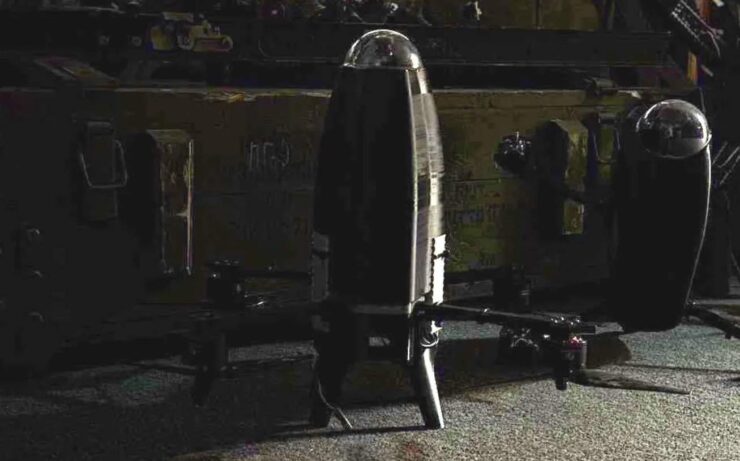
According to the command, interceptor drones are already demonstrating an effectiveness rate of over 70% in real combat against Shaheds. The President has spoken of Ukrainian production reaching 700–800 interceptor drones per day. However, their effective use requires coordinated efforts.
To reinforce the drone component within the Air Force, a new branch is being formed – the Air Defence Unmanned Systems Forces. Their task is to create a specialised air defence layer focused on kamikaze drones, offloading part of the burden from traditional surface-to-air missile forces and tactical aviation.
Helicopters, Light Aviation and “Aerial Hunters”
Layered air defence is not only “classic” air defence with SAMs and radars; it is also active airborne assets. Ukraine has officially launched the process of procuring Bell AH-1Z Viper and UH-1Y Venom helicopters to strengthen its capabilities in countering Shaheds and, in effect, to form yet another air defence layer – based on light aviation and modern helicopters equipped with appropriate sensors and weapons. Today, this direction is positioned as one of the key pillars of the future air defence aviation component of the Armed Forces of Ukraine.
These helicopters can become not only a “classic” strike tool on the battlefield, but also an element of the system to counter drones and low-flying cruise missiles – especially when combined with radars, networked targeting systems, and ground-based air defence.
Separately, experts are discussing the idea of using light turboprop aircraft such as the Super Tucano as a relatively inexpensive and economical means of patrolling and intercepting slow aerial targets in areas with low density of enemy air defences. In many countries, such aircraft have been considered a platform for “policing” missions and are now seen as a potential tool for countering kamikaze drones and other aerial threats.
Ukraine as Test Range and Teacher for Allies
In practice, Ukraine is already acting as the vanguard in shaping a new European air defence system. What is being tested today in our skies – from networks of mobile groups to the integration of interceptor drones and ground-based EW – will tomorrow form the backbone of the defence of the Baltic states, Poland, Romania, and the Black Sea region.
This is why the message to partners must be as clear as possible:
• Ukraine needs additional Patriot, IRIS-T, NASAMS systems and missiles for them.
• No less critical are tactical-level radars, command-and-control and communications systems.
• It is essential to have mass-produced, relatively inexpensive counter-drone assets: from interceptor UAVs and EW to machine guns, guns, and light aircraft.
• All of this must operate not as a patchwork of miscellaneous aid, but as a single, coordinated system.
Ukraine is gradually moving from the mindset of “we need one more specific system” to the mindset of “we need an integrated, multi-layered air defence”. Our partners must adopt the same logic. There is no magic weapon capable of closing the sky over Ukraine. There is only a comprehensive, layered, integrated system in which Patriot, interceptor drones, radars, helicopters, light aviation, anti-aircraft artillery and EW complement one another.
Only such a system can force the Kremlin to acknowledge that the cost of the air war against Ukraine has become too high and its effectiveness too low. And only such a system will become the foundation of Europe’s future air defence.